Posts

Leaving a Legacy at Work

When I was the business editor for a daily newspaper, some friends and I started a tradition. Every Friday, one of us would stop at our favorite doughnut shop on the way to work and pick up two dozen pastries to share with our colleagues. It was a delicious way to celebrate the end of another crazy week in print journalism. Later, when I was the assignment editor for the same newspaper, one of my jobs was to prepare a list of the stories that were available for each day’s edition. I would indicate which pieces were going to run on A1 and the front of the metro section, as well as the priorities for spots inside the paper. I sent this list to the staff each day, but I didn’t want it to be boring. So, as a lover of bacon, I started including a bacon- or pig-related joke or pun with each day’s email. Many of the funnies I used were real groaners—definitely in the “dad jokes” category—but my colleagues came to expect and (usually) appreciate their inclusion on the daily rundown. I left th...
Encouraging the 'Quiet Ones' to Speak Up

Most of us are not eager to attend the many meetings that clog our calendars, but we recognize that they are an inevitable part of office life. And once you’ve been to enough meetings, you start to recognize the different types of meeting attendees.  First, you’ve got the enthusiastic ones. They’re excited to interact with colleagues, so they arrive in the meeting room or join the video call a few minutes early to lead the pre-meeting small talk. During the meeting itself, they are active participants, always ready to offer opinions or lighten the mood with a funny story. Then you’ve got the disconnected ones. If it’s an in-person meeting, they are there in body, but not in spirit. They’re likely to be surreptitiously working on something else during the meeting. If they’re on a video call, they probably have their camera off, actively multitasking. The regular attendees are there because they must be, but they understand the need for the meeting and want to help the team achieve ...

Finding Value in Forgotten Talents

Image
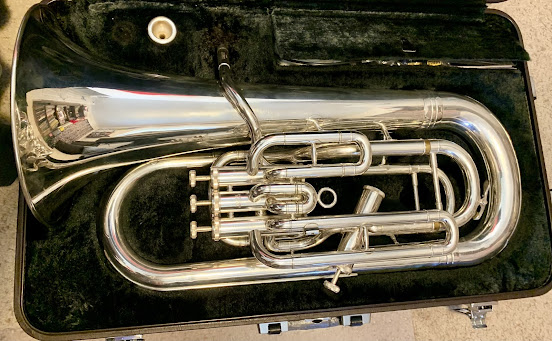
When I was in middle school, I played cornet in the band. I was still learning, so I was just OK at it. Then I got braces, and my playing regressed. Significantly. The director noticed I was struggling with my embouchure as my braces pressed against my gums every time I put my lips to the relatively small mouthpiece. He suggested I try a low-brass instrument with a larger mouthpiece and handed me a baritone horn.  Thus began a beautiful musical relationship. I thoroughly enjoyed playing the baritone and got pretty good at it during high school. My parents eventually bought me a silver euphonium (a close cousin of the baritone) from a friend and classmate who was a much better musician. That instrument has been in our family ever since. I went on to play in the marching band and symphonic band in college, and I played in a few summer community bands over the years. However, as time passed, those moments of picking up my horn to play a few measures became fewer and further between. E...

Creating a Communications Protocol

Image
Successful internal communication requires more than a finely crafted message. That message also must be delivered by the right person, using the right platform, at the right time. And all those decisions should be handled consistently across your organization. At one of my recent employers, we discovered we had a problem with several of these steps. Some situations that required specific messaging came up frequently, but they were managed differently depending on the team leader involved. That’s understandable, because each of them had a different take on what would be best in the various situations. However, this lack of consistency and standardization with our messaging led to confusion, miscommunication, and misunderstandings, which hurt morale. When I moved into the internal communications role for that division, one of my initial tasks was to create a communications protocol to clean up this mess. The first step in this process is to make a list of the different types of messages...

Discovering the Magic of Gratitude

I was stressed.  I was about two months into a three-month stint of filling in for a colleague who was on leave. She had trained me thoroughly before she left, but the tasks I needed to complete had nothing to do with my education, background, and experience. I did my best, but I was in over my head.  On this particular day, I was struggling to resolve a particularly confusing and irritating problem. I knew people were depending on me to find a solution so they could avoid delays in their work, but it wasn’t coming together.   I felt bad about myself and my predicament. I assumed everyone was upset with me. Then an amazing thing happened. One of my colleagues contacted me out of the blue to thank me. They said they wanted me to know how much they appreciated the work I was doing, even though it was well outside my wheelhouse, and they ended with a few words of encouragement. All told, the message was maybe four sentences. But it completely turned my day around. Inste...

A Message to My Son as He Graduates

My son, Max, is about to graduate from high school. He’ll spend this summer working a part-time job to earn some money (or at least, he’d better!), and then he’ll be off to college in the fall. This is an open letter to him with advice for his time in school and the workplace, based on my experiences—and my hopes. Dear Max, Congratulations on your graduation! I’m so proud of you! I know you’ve thoroughly enjoyed your high school years and made the most of them. You worked hard in classes and earned good grades. You found a passion for acting and the theater. You’ve been friendly and kind to classmates and teachers. And you’ve started to discover who you are. As you prepare to take your first big steps into the adult world, I’ve got a few words of advice. I promise these suggestions are more important than my frequent, nagging reminders that you need to clean your room. I hope you’ll find them useful. First, always remember that little things matter . You have a gift for kindness—you ge...

Getting the Most out of One-on-Ones

When I started as an operations manager at my most recent workplace, I had more than 15 direct reports. That eventually rose to 25 before I shifted roles and was responsible for between five and ten people for the rest of my time there. Managing 25 people was a challenge. Writing their annual performance appraisals took two weeks! However, one of my favorite parts of managing that large group was the opportunity it gave me to have lots of one-on-one meetings. I committed to having those one-on-ones every other week, so I’d usually have 13 one week and 12 the next. They usually lasted between 15 and 30 minutes, although some ran longer. One colleague was routinely in my office for an hour or more, but we spent much of that time laughing. Those epic meetings often meant I’d have a longer day at the office, but it was worth it to have a bit of fun . One-on-one meetings between a leader and employee are vital for building connections, providing information, managing performance , and guidi...

Showing Up to Build Connections

Success as a manager is much more likely if you focus on building connections.  You must bring your team together so they feel connected to each other and the projects they’re doing. You should build ties with other managers and colleagues throughout the company so you can help them or ask for their assistance. You need to connect with your supervisor to ensure you’re on the same page with them and meeting (or, hopefully, exceeding) their expectations.  Of those connections, the links within your team may be the most important. I’m not basing this on a gut feeling. Years of poring over the results of employee engagement surveys have provided me with ample evidence that people want to feel connected to their colleagues and managers while at work. And when it comes to building those connections, they look to middle managers for help.  While there are many ways for middle managers to strengthen those ties , one that is often overlooked is the simple act of showing up, whethe...

Practicing 'Practical Empathy' as a Leader

A manager I know had an employee who was facing a challenging situation in their family. They needed time to help another family member, but they felt guilty about falling behind on their work.  The manager encouraged the employee to take time off and not worry about their tasks, even suggesting gently that they might want to take a temporary leave. However, the employee chose to keep trying to do their job. They said they appreciated the change of pace it offered, even though they were distracted and not able to perform at their usual level.  The two of them limped through this situation for several months. The employee felt guilty about their work effort, but they were doing their best under the circumstances. Meanwhile, the manager felt like they were not handling everything precisely the way they should. It was difficult and stressful, and the manager felt unprepared to offer the right kind of assistance or to guide the employee to resources that could help. I’ve often tho...

Communicating with Angry Clients

Middle managers spend much of their time discussing work issues with their teams and their supervisors, but perhaps the most difficult communication tasks are those that involve people from outside the organization.  I learned during my years working for newspapers and other companies that talking to angry customers is never fun. It was usually the part of the job I dreaded the most. Fortunately, interactions with perturbed clients often weren’t as bad as I expected them to be, and I’ve developed a few tactics over the years to help me work through problems while still having my team members’ backs.  I don’t have formal training in customer service, but here are some ideas that have worked well for me when dealing with a client “escalation.” Respond quickly, but take time to prepare . It may seem that these two statements are contradictory, but they aren’t. When you receive a client’s complaint, you should try to get back to them as soon as possible. However, if you’re not rea...

Focusing on Personal Development

Managers are responsible for helping employees meet business-related targets, but good leaders also want the people who report to them to achieve personal development goals. Doing so builds stronger workers and better teams, and seeing your employees succeed is one of the joys of middle management. However, just as a manager needs to help employees create and follow through on career development plans, it’s also vital that managers do the same for themselves. Especially if you’re in middle management, your boss may not have the time to help you do this, so you need to take the initiative and make your development a priority. Here are a few ideas to help: Spend time thinking about your short- and long-term goals . What do you want to accomplish in the next quarter, the next year, and the next five years? What are other people in your position doing to advance in their careers? Think of someone who sets an example you would like to follow in your professional or personal life and conside...

Guiding Meetings and Making Decisions

I’m not a fan of meetings. To be fair, I don’t know many people who are. However, I recognize that they are a necessary part of most jobs. Because we’re likely to spend large chunks of our careers in meetings with our teams, our supervisors, fellow managers, or others, we should at least make sure those get-togethers are meaningful. I believe a good meeting usually results in effective decision-making, and if it’s a meeting I’m running, that’s what I’m hoping to achieve.  Here are a few steps I follow to keep people on track and moving toward a decision during a work meeting: Consider the specifics of the situation . Before the meeting begins, answer several questions. First, and perhaps most importantly, do you need to have a meeting, or could the work to be done be handled via email? (If it could, please consider that option!) Assuming you do need a meeting, have you clearly been put in charge of solving the problem or completing the project that will be discussed? Do the other p...

Managing Relationships with Other Managers

Most managers keep their primary focus on their teams, which makes complete sense. They spend a significant chunk of their time each day trying to help their people hit work-related targets and achieve personal development goals. This often means that they are unable to put as much effort into their relationships with peers on the same leadership level in their organization. However, I have found that taking time to build those ties can be vitally important to helping your team and the entire company succeed. Here are a few ideas to help you as you seek to strengthen bonds with your fellow managers: Get to know them . This is similar to what you do with your team members. Take the time to communicate with other managers. In addition to talking to them about work, find out about their interests outside of the office. Show that you care about them as people, not just colleagues. You likely won’t become best friends with all your fellow managers, and that’s OK. You should at least be good...

Understanding Communication from the C-suite

When you’re part of a small team in a big organization, it can be difficult to understand statements you hear from the CEO and other high-level executives in “town hall” meetings. Perhaps they mention projects that don’t seem to have a direct impact on the work you and your team are doing. Or maybe they’re using acronyms and jargon you don’t understand. In such cases, tuning out their messages is a natural response. But it’s a bad idea, especially if you’re a manager. Though C-suite executives may be focusing on the big picture, it’s up to you to interpret their statements and translate them so your employees can understand what the organization is doing and how they can contribute to meeting overall goals. Here are a few suggestions to help you understand and explain those high-level messages. Pay attention . Some people ignore companywide messages and skip town hall meetings, assuming they have better things to do with their time. I think that’s a mistake. You need to know what you...

Embracing the Joys of Middle Management

Middle management is not for the faint of heart.  You face daily demands from leaders higher up the food chain and from the people who report to you. You juggle multiple projects and deadlines of your own, and you’re responsible for making sure your team members stay on track and complete their projects. It sometimes seems that you get all the blame when something goes wrong, but none of the credit when it goes well. So why would anyone aspire to management? As someone who has worked in middle management for decades, I can confirm that the challenges are many, but so are the rewards. Today, let’s focus on the latter. Here are some of the best things about working in management generally and middle management specifically: Higher compensation . This is probably obvious, but managers usually get paid more than the people they manage. Since money is an integral part of life, this is a benefit that shouldn’t be overlooked, and it’s usually a major factor in people deciding to seek a ro...

Adopting a Philosophy of Transparency

Information is tricky. It can be incredibly powerful, both when it’s shared and when it’s withheld. It can move people and organizations in directions either planned or unexpected, depending on how it is released. And it sometimes seems to have a mind of its own. If you’ve ever tried to keep a secret, you know firsthand how badly that information wants to be set free. To harness the power of information, an organization must determine how, and how much, it wants to communicate. Based on my years of experience in several different kinds of businesses and organizations, I’ve come to believe that a philosophy of transparency is the best foundation for an effective communications plan. This is not to say that a leader should communicate every detail about every topic to every person on his team all the time. Organizations will always need some level of confidentiality, especially when dealing with sensitive topics. However, that doesn’t mean a business should default to secrecy. Rather, I ...

Navigating 'Office Politics'

Even in an age of remote and hybrid work, most people can’t avoid “office politics.” It’s easy to get caught up in thinking about who slighted whom, which colleague received a promotion you don’t think they deserved, or why a particular coworker got a plum project. However, you don’t have to participate just because these shenanigans surround you. What you should do is prepare for the inevitability of the challenge they represent and decide how you’re going to react. Here are a few things to remember: Ask yourself, “What is my tolerance for office politics?” If you enjoy being in the thick of this kind of thing, I guess you can dive right in! But I hope you’ll choose otherwise, as it’s rare that any good comes of these kinds of gossipy machinations. I don’t enjoy work politics, so the advice below comes from that perspective. Strive to build trust with your colleagues . Some of your colleagues will become trusted friends, while others won’t. That’s natural and OK. But it is important ...

Managing Without Micromanaging

Picture this: you work hard every day, checking tasks off your to-do list, meeting deadlines, and completing outstanding projects. But no matter what you do or how well you communicate your accomplishments to your manager, it feels like they are always looking over your shoulder, offering “suggestions” that don’t help. Their micromanagement only slows you down and makes you less efficient. Sound familiar? Nobody wants to feel like they’re being micromanaged. Most managers know from personal experience how annoying that can be. However, as a manager, you must be able to track your employees’ progress . This means you need to find a balance between digging into the details of their work and trusting them to work independently. Here are a few ideas to help you walk that line. Communicate effectively and get to know your team members . Quality communication always makes management easier. Start by finding out how much management each of your team members prefers and try to work within thos...

Having Fun at Work

On most weekdays, you spend more waking hours interacting with work colleagues than with family and friends. Since that is the case, I firmly believe you should have some fun while working—and so should the people who work for you. As a manager, you’re responsible for ensuring your employees enjoy their jobs while staying engaged and focused on the tasks at hand. This requires a bit of a balancing act, but you can do both! Here are some suggestions to help. Get to know people. You don’t want to get too involved in the details of your direct reports’ personal lives, but it’s good to know some things about them, their families, their likes and dislikes, their hobbies, etc. In other words, be a human! This is important as a manager because what’s happening outside of work hours can affect what your employees do while they’re working, and you need to be aware of that. But this knowledge also allows you to have occasional fun conversations with them. If all you ever talk about is business ...